

(read the article in english below)
A parte inicial da segunda visita ao Brasil de Yvette van der Merwe, presidente da Organização Internacional da Vinha e do Vinho (OIV), foi uma sucessão de primeiras vezes: a primeira visita a uma concentradora de sucos, o primeiro sabrage, a primeira degustação de um espumante Moscatel, a primeira prova direto de um tanque (com direito a ‘operar’ a torneira), o primeiro ensaio para fazer um blend de suco de uva, a primeira dose de grappa e o primeiro Cappelletti – afinal, a viagem começou pela Serra Gaúcha, mais especificamente Bento Gonçalves (RS).
Apesar da extensa e cansativa agenda, Yvette se mostrou muito receptiva e simpática, sempre gentil e solícita. Um dos seus principais objetivos no país, repetiu diversas vezes, é tentar entender o comportamento do consumidor, por isso também questiona bastante: “sou muito curiosa”, diz ela, enquanto pede mais informações sobre o trabalho de gravura no corrimão das escadas de acesso às caves da Casa Valduga. Atenta às explicações dos anfitriões nos mais diferentes locais, fez muitas fotos de detalhes externos de cada empreendimento: os jardins, as flores, a vegetação, a lua.
Yvette esteve na capital brasileira do vinho a convite da ConceptWine, como palestrante principal do 2o Enomeeting, congresso técnico focado em vinho, enologia e viticultura. Em uma das últimas apresentações dos três dias do encontro, Yvette, economista de formação, discorreu a respeito das perspectivas da OIV sobre sustentabilidade, mercados e consumidores de um setor vitivinícola global em transição.
Segunda visita ao país
Até então a única vez que tinha estado no Brasil havia sido há 10 anos: em 2016, Yvette participou do Congresso Mundial da OIV, naquele ano realizado no Brasil, também em Bento Gonçalves. Na época, a presidência estava sob a responsabilidade de uma mulher, a alemã Monika Christmann; em 2018 foi a vez da brasileira Regina Vanderlinde, que ficou no cargo até 2021.
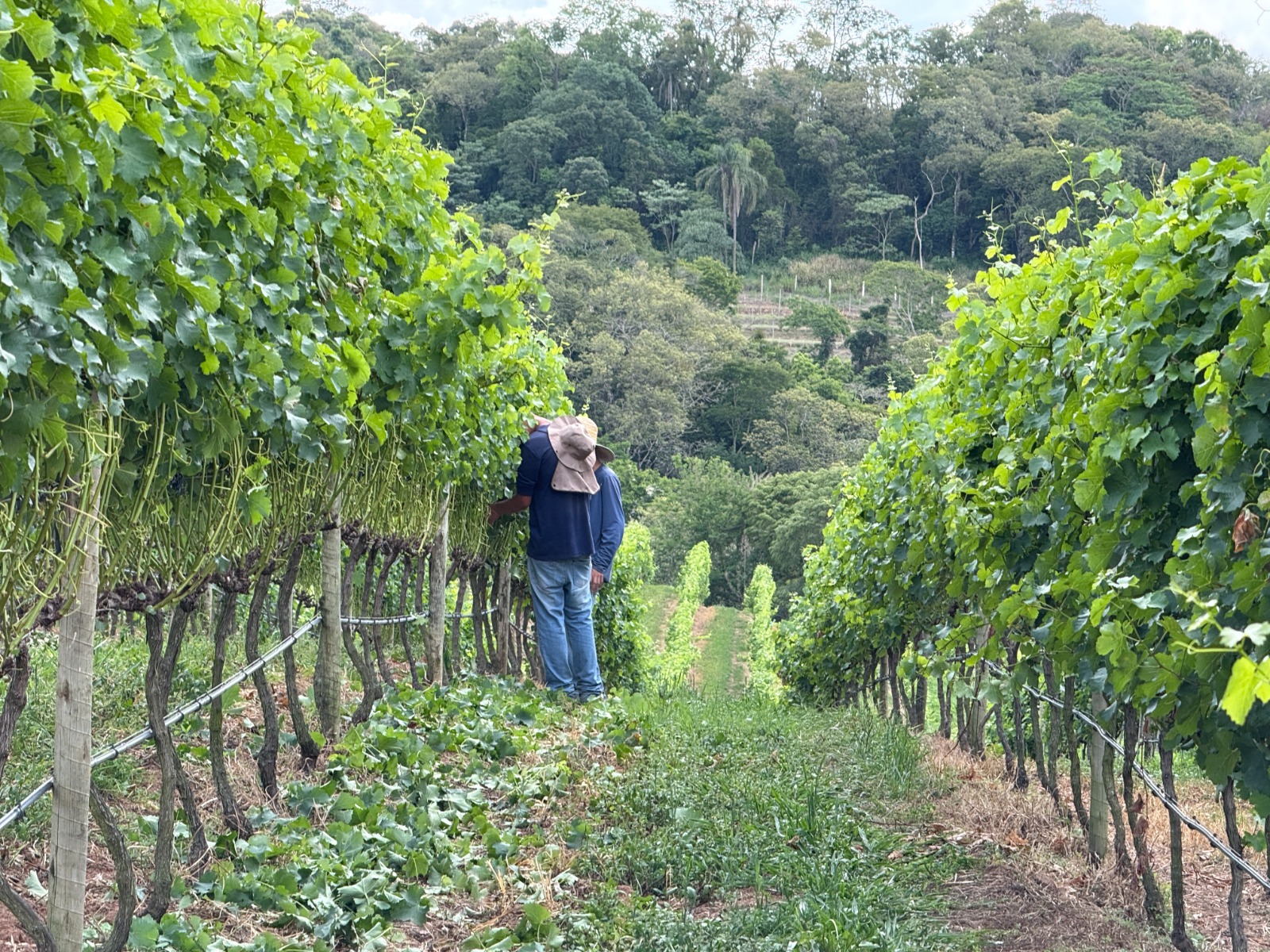
Uma década depois – agora à frente da OIV, uma organização científica e técnica, formada por 51 estados membros, como ela fez questão de ressaltar diversas vezes – leva as melhores impressões da indústria do vinho no país. Em suas primeiras falas já deixou claro que gostaria de saber mais a respeito do Enoturismo brasileiro, e também sobre o comportamento do consumidor, mas externou que tem muita curiosidade a respeito da técnica da Dupla Poda, sistema que possibilita a produção dos Vinhos de Inverno no Sudeste e Centro Oeste brasileiros, fazendo com que o Brasil seja o único país no mundo capaz de produzir vinhos a partir de três diferentes tipos de viticultura, Tradicional, Tropical e de Inverno. Um pouco sobre esse pioneirismo brasileiro pode conhecer na palestra de Isabela Peregrino – enóloga consultora de diversas vinícolas que utilizam o sistema, principalmente em Minas Gerais – no Enomeeting.
Acompanhamos a primeira etapa da viagem de Yvette pelo Brasil, em Bento Gonçalves e Flores da Cunha. A presidente da OIV fica no Brasil até os primeiros dias de setembro, e antes de retornar ao seu país de origem, a África do Sul, deve conhecer a região dos Campos de Cima da Serra e depois estará em Brasília, conhecendo de perto vinhedos e provando vinhos elaborados a partir do sistema de Dupla Poda. A passagem pela capital federal tem na agenda algumas reuniões com representantes do ministério da Agricultura.
Três dias na Serra Gaúcha
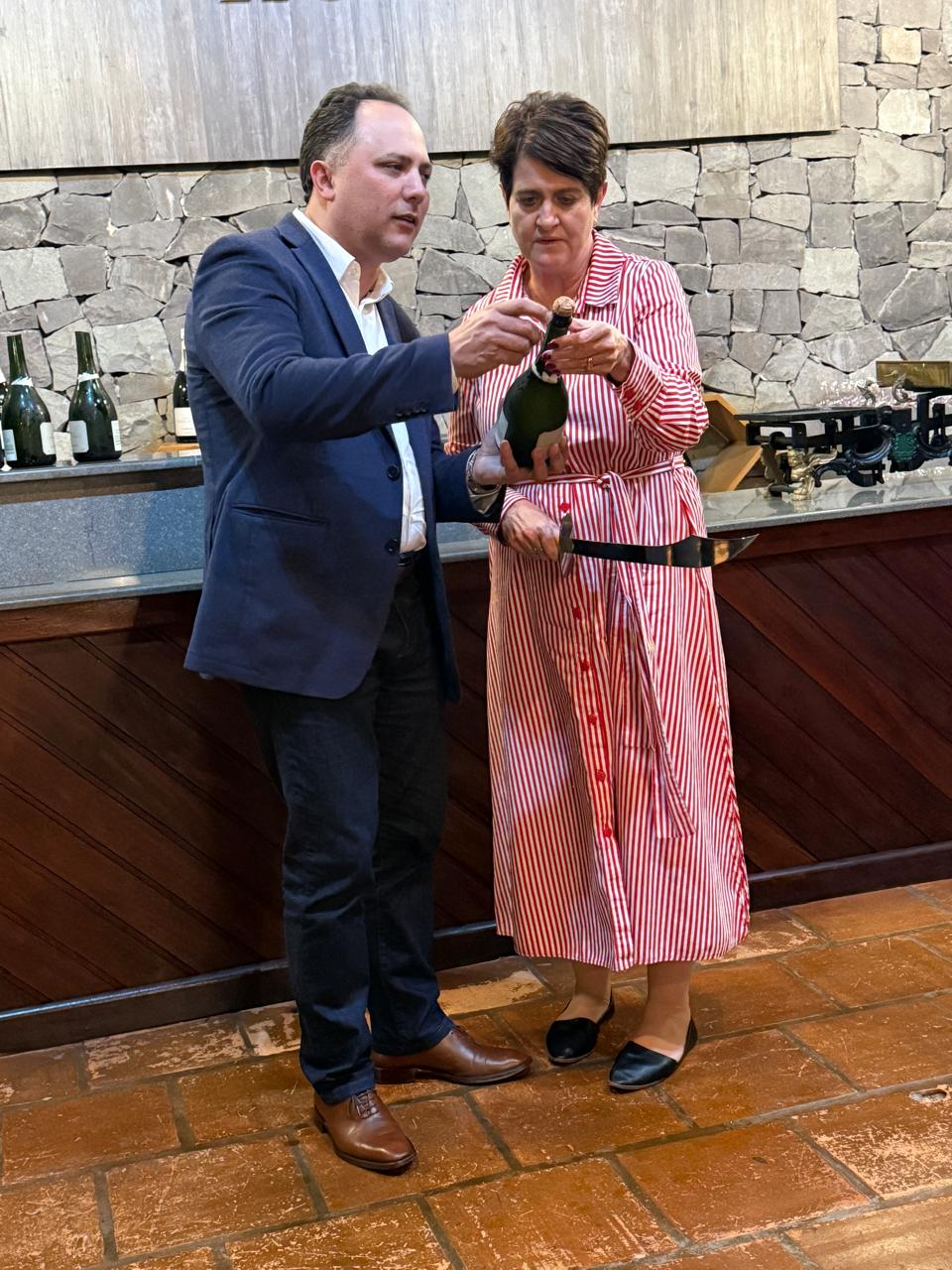
A missão da presidente da OIV no Brasil começou com uma visita à Tecnovin, uma grande indústria de processamento e beneficiamento de frutas, especializada na produção de sucos concentrados e matérias-primas para as indústrias de bebidas, alimentícia, de cosméticos e química. Ali Yvette foi recepcionada pelo gerente corporativo administrativo Everton Milani – também presidente da Câmara Setorial da Cadeia Produtiva de Viticultura, Vinhos e Derivados – que apresentou todas as etapas dos processos produtivos. À noite, em jantar na vinícola Maison Forestier, fez uma breve fala salientando que “não era o momento de discutir questões técnicas da OIV e sim apreciar uma bela refeição, com excelentes vinhos e aproveitar a companhia de todos”. Foi ali também que a curiosa Yvette ajudou na preparação e provou, pela primeira vez, o pinhão na grimpa – antes já tinha feito seu primeiro sabrage (na foto acima, com Everton Milani).
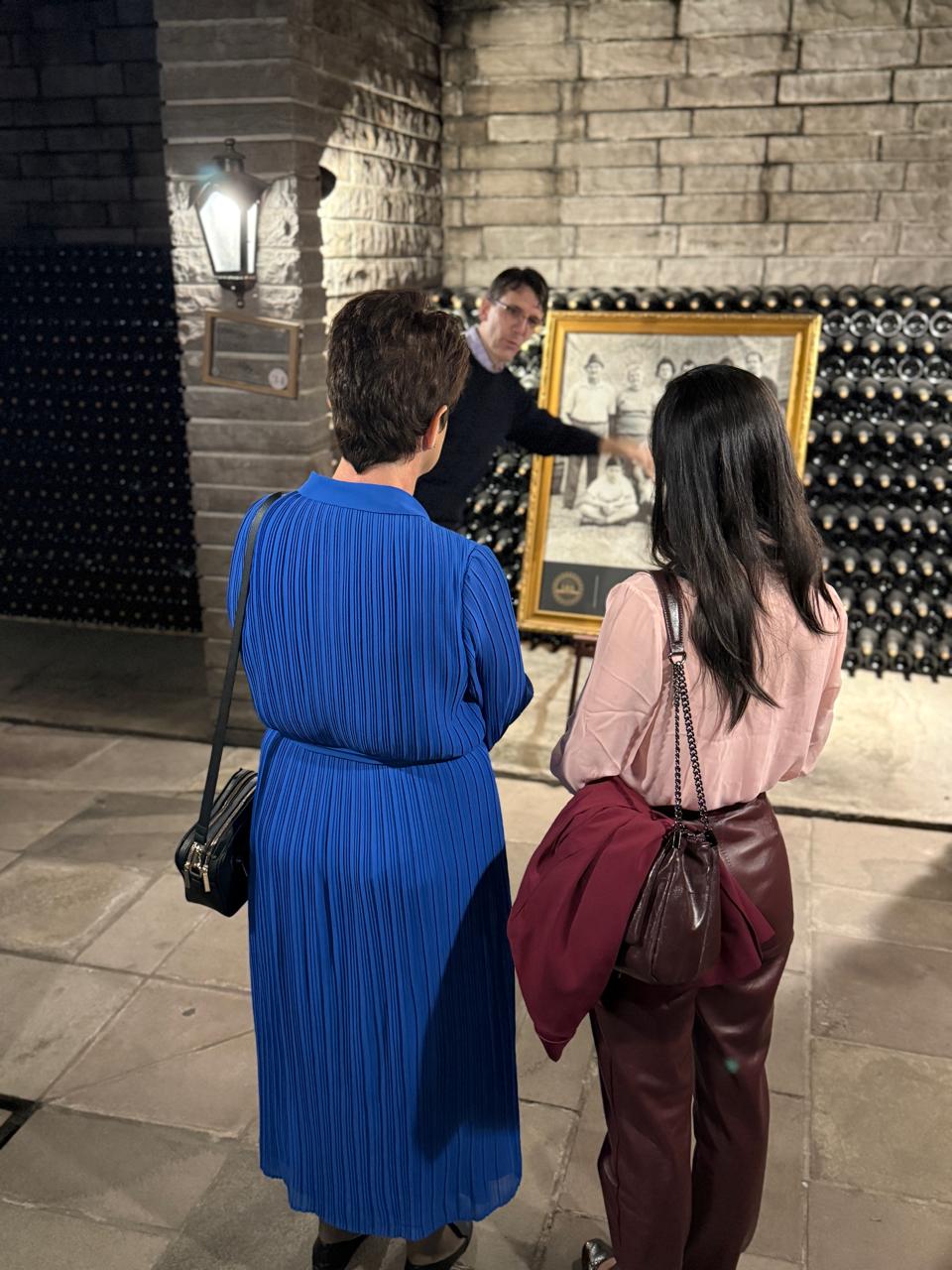
Na Casa Valduga, conduzida pelos enólogos Juliano Perin (foto acima) e Daniel Dalla Vale, ficou admirada com a quantidade de experiências enoturísticas oferecidas pela empresa, desde rápidas degustações no balcão do varejo até cursos mais técnicos de cerca de quatro horas, com visita aos vinhedos e à produção, ministrados por enólogos e com direito a certificado. Ali a faceta da economista especialista em comportamento do consumidor apareceu bastante: quando informada que a maior parte do público do Enoturismo é de 30 anos ou mais logo questionou o que a empresa está fazendo para reter os clientes entre 18 anos e 30 anos.
A resposta para esta pergunta não é assim tão simples, mas uma parte dela estava alguns passos a frente, na sala de expedição de espumantes – estilo de vinho declaradamente preferido de Yvette: “por que não fazer do espumante um produto do dia a dia?”, perguntou ela, “por que o espumante ainda é, para muitos, algo a ser bebido apenas em momentos comemorativos?”, questionou?
E como espumante não precisa de um momento especial, foi o 130 da Casa Valduga que abriu o almoço no qual Yvette foi apresentada ao Cappelletti. Antes de ir embora, sorriu ao provar a Grappa branca.
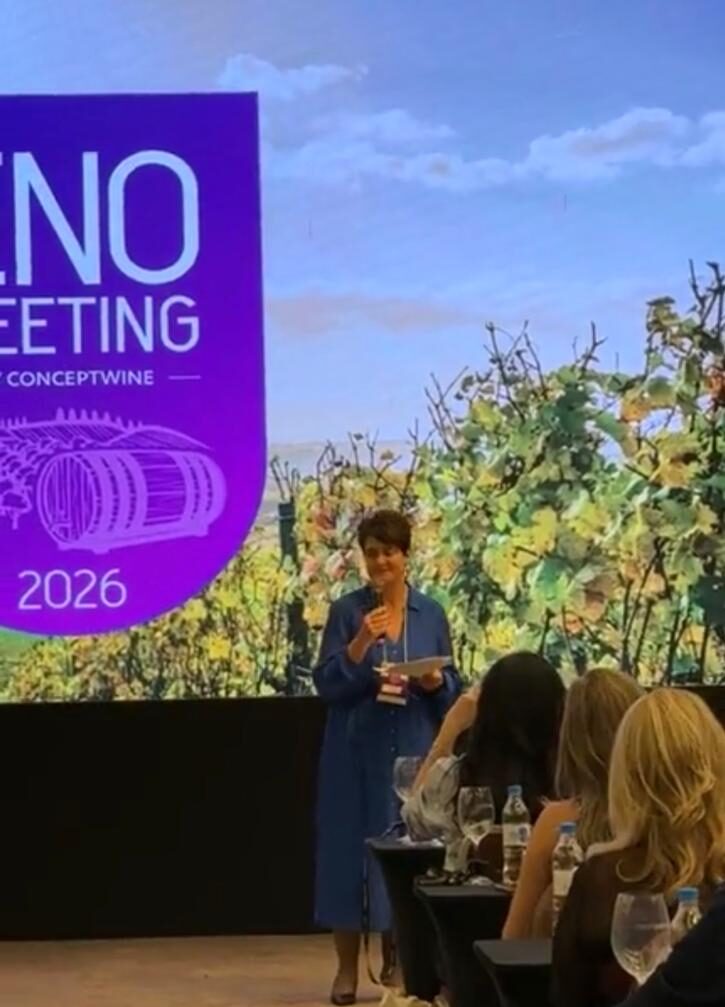
À tarde, com uma plateia lotada por especialistas, estudantes, enólogos, sommeliers e profissionais de diversos segmentos da indústria do vinho, Yvette abriu a 2ª edição do Enomeeting: “Hoje, o Brasil é um importante país produtor e consumidor de vinho, com notável diversidade, variedades de uvas e sistemas de produção. Uma nação que tem muito a aprender com outros países produtores de vinho, mas também há muito que a comunidade vinícola internacional pode aprender com o Brasil”, disse em seu discurso de abertura, uma fala que se fortaleceu durante os dias que esteve aqui.
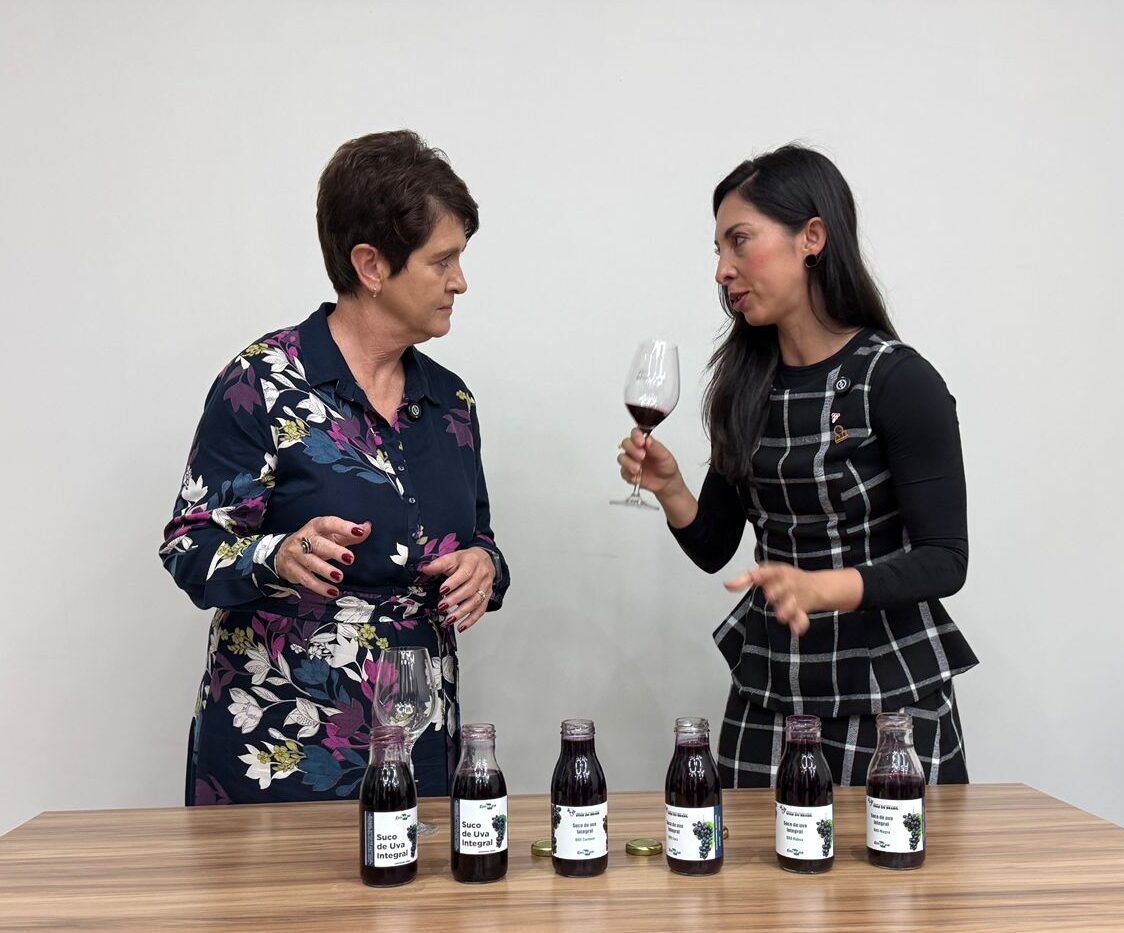
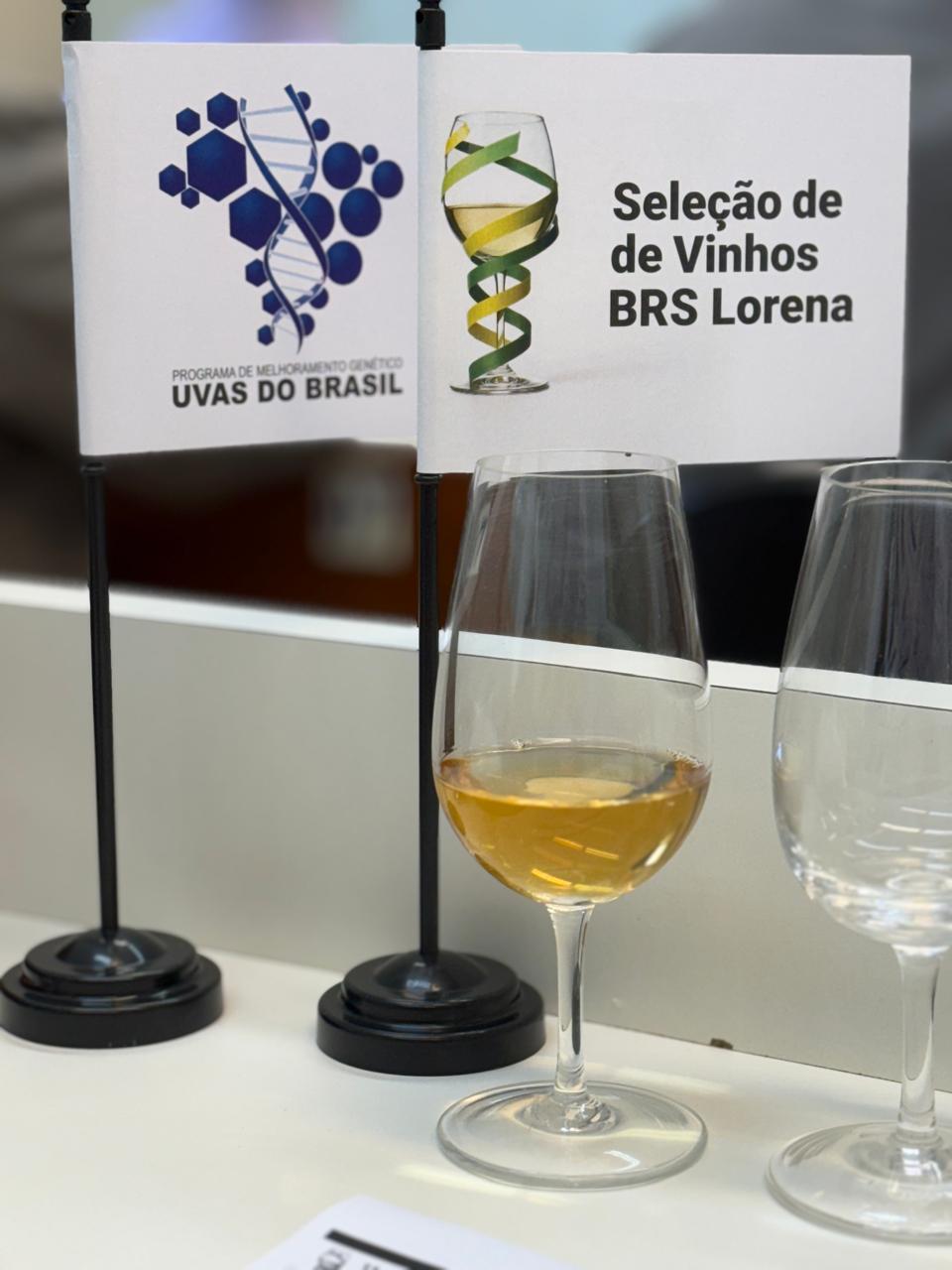
No dia seguinte, em encontro setorial organizado pelo Consevitis-RS, após uma breve apresentação de dados da indústria do vinho no Brasil, degustou diversas amostras de suco de uva produzido a partir de diferentes variedades BRS, assinadas pela Embrapa – gostou tanto do que provou que deixou uma sugestão no ar: “quem sabe um dia, ao sair da OIV, eu possa ser a embaixadora do suco de uva brasileiro?”, brincou. Ou não, porque ao lado de Fernanda Spinelli, Engenheira de Alimentos brasileira delegada da OIV, que a acompanhou durante todo o tempo, ensaiou seu primeiro blend de suco, com as BRS Carmem, Cora e Rúbea.
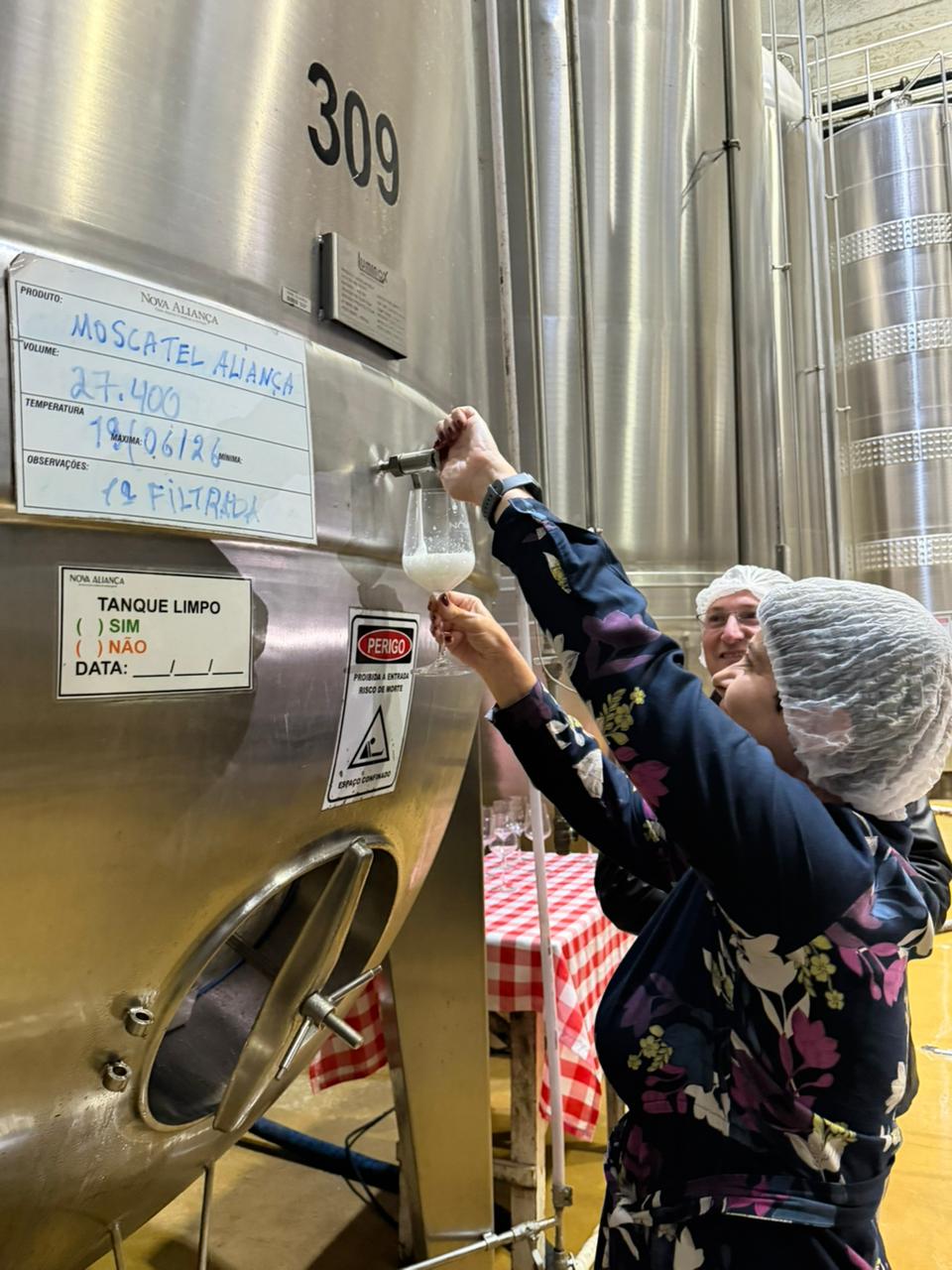
Acompanhamos Yvette em mais uma visita, desta vez na sede da Nova Aliança Vinícola Cooperativa, em Flores da Cunha. Lá, Heleno Facchin, CEO, e Sidimar Fleck, presidente, apresentaram a companhia e os produtos resultados do trabalho de 620 famílias cooperadas. Foi na cantina da Nova Aliança que Yvette provou, pela primeira vez, um Moscatel, que ela mesma serviu, direto do tanque.
Sete perguntas para a presidente da OIV
Como a OIV percebe a viticultura brasileira?
Como membro da OIV nós valorizamos a contribuição do Brasil. Nós sabemos que um país tem uma contribuição para fazer, independente de onde está em sua trajetória. Se é um novo país na indústria, se é um país mais ou menos desenvolvido no setor. Onde quer que estejam no espectro da sua jornada, de vinho, nós sentimos que eles têm uma contribuição para fazer.
Como OIV, nós temos que dar valor aos nossos membros. E o valor para nós é trazer todos os especialistas juntos para interagir ideias, conhecimento, expertise, pesquisa, inovação. E precisamos dos jovens, porque precisamos da energia e de novas ideias, mas também precisamos de experiência, confiança e conhecimento.
Nós vemos o Brasil, como vemos cada país membro que tem uma contribuição para fazer: sempre temos algo para aprender deles.
E como ocorrem as mudanças e os aprendizados na OIV?
Para mim é algo muito emocionante. Estou na OIV há quase 26 anos, passei por diversas posições. Se analisarmos como era e como está hoje são muitas mudanças. Sou a primeira presidente do continente africano, nós temos um CEO da Hemisfério Sul (John Barker, natural da Nova Zelândia). São duas pessoas do Hemisfério Sul, em 26 anos isso nunca tinha acontecido, sempre foi tudo muito francês, muito europeu, e eu pude ver isso mudar com o tempo.
Um mundo muito antigo, mas lembre que este mundo antigo – França, Espanha, Itália, ainda tem um pouco mais de 50% de produção mundial, então ainda é um grande componente dentro da OIV, mas você vê as vozes dos novos países do mundo.
E quais os desafios disso?
Nós vemos, por exemplo, a França, Bordeaux, lutando, nós vemos alguns dos outros países lutando com exatamente os mesmos desafios que os novos países do mundo. Agora, de repente, eles percebem que não são mais os únicos, que não são mais os principais, mas que têm os mesmos desafios dos menores.
O consumo que está declinando, as mudanças climáticas…Eu acho que isso cria uma necessidade para que as pessoas comecem a se engajar com os outros países.
E com tudo isso como o Brasil ganha espaço dentro da OIV?
O Brasil tem muito o que aprender com a OIV, mas a OIV também tem muito o que aprender com o Brasil. A cultura dentro da Organização se tornou muito mais colaborativa. O Brasil tem voz, tem direto a voto, eu amo isso sobre a OIV. O que é importante é que tenhamos diversidade de especialistas dentro das nossas comissões, subcomissões e nossos grupos de trabalho.
É importante que os países entendam a importância de enviar seus especialistas. Porque se a Fernanda Spinelli não tivesse vindo, se a Aline Barcellos não tivesse vindo, se a Regina Vanderlinde não tivesse vindo, então onde estaríamos? Então, nós sempre enfatizamos quando nos engajamos com o governo – porque somos uma organização intergovernamental – para que as indústrias deem o valor, enfatizamos esse valor da pesquisa e da ciência.
Quais tuas expectativas sobre o Brasil?
Bem, estou aqui há apenas dois dias, mas posso dizer que percebi que mudou muito para melhor. Nós vimos muito progresso da produção brasileira – e lembre que eu analiso do ponto de vista do consumidor.
Nesse pouco tempo que estive aqui pude ver a indústria de suco concentrado, saber mais sobre o Enoturismo, era isso que que quer conhecer de perto. E agora eu pude vivenciar isso, pude comprovar que houve muito progresso.
Estando na OIV, atualizada com o que está acontecendo eu não precisaria vir aqui para saber o que está ocorrendo com a indústria do suco de uva e para entender que houve muito progresso no Brasil. E progresso não apenas do ponto de vista da produção, mas também em conseguir que o consumidor aumente o seu consumo, especialmente o jovem, fazer com que ele se envolva com a categoria.
Como comparas o Brasil a outros países produtores de vinho que já visitaste?
Do pouco que eu vi até agora acho que vocês têm uma resposta rápida sobre o que está acontecendo na indústria. Estive em vários países e digo que o que vocês fazem em termos de Enoturismo fazem excepcionalmente bem. Estou conhecendo projetos nos quais percebo que a indústria está buscando fazer o consumidor se engajar com o vinho, mas sem tirar o consumo do vinho. Para mim isso é muito importante: a primeira coisa é o vinho.
O Brasil está emitindo pequenos sinais de como conectar ao consumidor, não tentando educá-los, mas os ouvindo e oferecendo o que eles querem.
Tua próxima parada, depois do Rio Grande do Sul, será Brasília e os Vinhos de Inverno: o que esperas ver lá?
Não faço ideia, risos. Mas é por isso que quero ir e ver, sou bastante curiosa, quero muito conhecer a Dupla Poda, sei muito pouco sobre isso, por esse motivo quero ir e ver, não sei se outro lugar do mundo faz isso. Eu tenho muitas perguntas sobre essa técnica, estou muito ansiosa para conhecer e saber, por exemplo, por que só no Brasil?
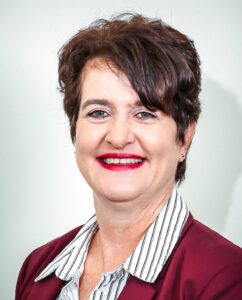
Da objetividade dos números para a subjetividade da uva e do vinho: conheça Yvette van der Merwe, a economista que está no comando da ‘ONU’ do vinho
Em 2024 a sul-africana Yvette van der Merwe, economista e especialista em tecnologias da informação, assumiu a é presidência da Organização Internacional da Vinha e do Vinho (OIV). Eleita para um mandato de três anos, é a primeira presidente africana na história da entidade — um marco que coincide com a entrada da OIV em seu segundo século de existência.
Há quase três décadas no setor vitivinícola sul-africano, Yvette ocupa o cargo de CEO da South African Wine Industry Information and Systems (SAWIS), organização responsável pela administração do sistema de denominação de origem (Wine of Origin) e pela gestão de dados estatísticos e inteligência de negócios da indústria do vinho na África do Sul.
Sua trajetória na OIV começou em 2000, como integrante da delegação sul-africana. De lá ara cá, acumulou passagens por diferentes frentes técnicas da Instituição: foi vice-presidente do grupo de especialistas em Direito e Informação ao Consumidor entre 2013 e 2016, presidiu o grupo de especialistas em Análise Econômica, Mercados e Consumo de 2016 a 2021, e chegou à presidência da Comissão III – Economia e Direito, cargo que ocupou de 2022 a 2024, pouco antes de assumir a presidência geral da organização.
Formada em economia, com atuação também voltada a sistemas de informação e inteligência de mercado, construiu reputação como referência em regulamentação vitivinícola, estatísticas do setor e políticas internacionais do vinho — um perfil técnico ajuda a explicar sua ascensão a um posto historicamente ocupado por representantes europeus.
Fotos: Brasil de Vinhos | Lucia Porto e divulgação OIV
Yvette van der Merwe in Brazil: grape juice, Moscatel straight from the tank and Wine Tourism
The initial part of the second visit to Brazil by Yvette van der Merwe, president of the International Organisation of Vine and Wine (OIV), was a succession of firsts: the first visit to a juice concentrator, the first sabrage, the first tasting of a Moscatel sparkling wine, the first tasting straight from a tank (‘operating’ the tap), the first trial to make a blend of grape juice, the first dose of grappa and the first Cappelletti – after all, the trip began in Serra Gaúcha, more specifically Bento Gonçalves (RS).
Despite the extensive and tiring schedule, Yvette was very receptive and friendly, always kind and helpful. One of her main goals in the country, she repeated several times, is to try to understand consumer behavior, so she also questions a lot: “I’m very curious”, she says, while asking for more information about the engraving work on the handrail of the stairs to access the cellars of Casa Valduga. Attentive to the explanations of the hosts in the most different places, she took many photos of external details of each development: the gardens, the flowers, the vegetation, the moon.
Yvette was in the Brazilian capital of wine at the invitation of ConceptWine, as a keynote speaker at the 2nd Enomeeting, a technical congress focused on wine, oenology and viticulture. In one of the last presentations of the three days of the meeting, Yvette, an economist by training, spoke about the OIV’s perspectives on sustainability, markets and consumers of a global wine sector in transition.
Second visit to the country
Until then, the only time she had been to Brazil had been 10 years ago: in 2016, Yvette participated in the OIV World Congress, that year held in Brazil, also in Bento Gonçalves. At the time, the presidency was under the responsibility of a woman, the German Monika Christmann; in 2018 it was the turn of the Brazilian Regina Vanderlinde, who remained in office until 2021.
A decade later – now at the head of the OIV, a scientific and technical organization, formed by 51 member states, as she made a point of emphasizing several times – she has the best impressions of the wine industry in the country. In her first speeches, she has already made it clear that she would like to know more about Brazilian wine tourism, and also about consumer behavior, but she said that she is very curious about the Double Pruning technique, a system that enables the production of Winter Wines in the Brazilian Southeast and Midwest, making Brazil the only country in the world capable of producing wines from three different types of viticulture, Traditional, Tropical and Winter. A little about this Brazilian pioneering spirit can be found in the lecture by Isabela Peregrino – consultant winemaker of several wineries that use the system, mainly in Minas Gerais – at Enomeeting.
We follow the first stage of Yvette’s trip through Brazil, in Bento Gonçalves and Flores da Cunha. The president of the OIV will stay in Brazil until the first days of September, and before returning to her country of origin, South Africa, she should visit the region of Campos de Cima da Serra and then she will be in Brasilia, getting to know vineyards up close and tasting wines made from the Double Pruning system. The passage through the federal capital has on the agenda some meetings with representatives of the Ministry of Agriculture.
Three days in Serra Gaúcha
The mission of the president of the OIV in Brazil began with a visit to Tecnovin, a large fruit processing and processing industry, specialized in the production of concentrated juices and raw materials for the beverage, food, cosmetics and chemical industries. There Yvette was welcomed by the administrative corporate manager Everton Milani – also president of the Sectorial Chamber of the Viticulture, Wines and Derivatives Production Chain – who presented all the stages of the production processes. In the evening, at dinner at the Maison Forestier winery, she made a brief speech stressing that “it was not the time to discuss technical issues of the OIV, but to enjoy a beautiful meal, with excellent wines and enjoy the company of everyone”. It was also there that the curious Yvette helped in the preparation and tasted, for the first time, the pine nut in the pine branches – before that she had already made her first sabrage.
At Casa Valduga, led by winemakers Juliano Perin and Daniel Dalla Vale, she was amazed by the number of wine tourism experiences offered by the company, from quick tastings at the retail counter to more technical courses of about four hours, with visits to the vineyards and production, taught by winemakers and with the right to a certificate. There, the facet of the economist specialized in consumer behavior appeared a lot: when informed that most of the wine tourism public is 30 years old or older, she soon questioned what the company is doing to retain customers between 18 and 30 years old.
The answer to this question is not that simple, but a part of it was a few steps ahead, in the sparkling wine expedition room – Yvette’s professed favorite style of wine: “why not make sparkling wine an everyday product?”, she asked, “why is sparkling wine still, for many, something to be drunk only in commemorative moments?”, she asked?
And as sparkling wine doesn’t need a special moment, it was Casa Valduga’s 130 that opened the lunch in which Yvette was introduced to Cappelletti. Before leaving, she smiled as she tasted the white Grappa.
In the afternoon, with an audience packed with experts, students, winemakers, sommeliers and professionals from various segments of the wine industry, Yvette opened the 2nd edition of Enomeeting: “Today, Brazil is an important wine-producing and consuming country, with remarkable diversity, grape varieties and production systems. A nation that has a lot to learn from other wine-producing countries, but there is also a lot that the international wine community can learn from Brazil,” she said in her opening speech, a speech that was strengthened during the days she was here.
The next day, at a sectoral meeting organized by Consevitis-RS, after a brief presentation of data on the wine industry in Brazil, she tasted several samples of grape juice produced from different BRS varieties, signed by Embrapa – she liked what she tasted so much that she left a suggestion in the air: “who knows, maybe one day, when I leave OIV, I can be the ambassador of Brazilian grape juice?”, she joked. Or not, because alongside Fernanda Spinelli, a Brazilian Food Engineer delegate of the OIV, who accompanied her the entire time, she rehearsed her first juice blend, with the BRS Carmem, Cora and Rúbea.
We accompanied Yvette on another visit, this time at the headquarters of the Nova Aliança Vinícola Cooperativa, in Flores da Cunha. There, Heleno Facchin, CEO, and Sidimar Fleck, president, presented the company and the products resulting from the work of 620 cooperative families. It was in the Nova Aliança canteen that Yvette tasted, for the first time, a Moscatel, which she served herself, straight from the tank.
Seven questions for the president of the OIV
How does the OIV perceive Brazilian viticulture?
As a member of the OIV we value Brazil’s contribution. We know that a country has a contribution to make, regardless of where it is in its trajectory. Whether it is a new country in the industry, whether it is a more or less developed country in the sector. Wherever they are on the spectrum of their journey, of wine, we feel that they have a contribution to make.
As OIV, we have to give value to our members. And the value for us is to bring all the experts together to interact ideas, knowledge, expertise, research, innovation. And we need young people, because we need energy and new ideas, but we also need experience, confidence and knowledge.
We see Brazil, as we see each member country that has a contribution to make: we always have something to learn from them.
And how do changes and learning occur in OIV?
For me it is something very exciting. I have been at the OIV for almost 26 years, I have gone through several positions. If we analyze how it was and how it is today, there are many changes. I am the first president from the African continent, we have a CEO from the Southern Hemisphere (John Barker, born in New Zealand). They are two people from the Southern Hemisphere, in 26 years this had never happened, everything was always very French, very European, and I could see this change over time.
A very old world, but remember that this old world – France, Spain, Italy, still has a little over 50% of world production, so it’s still a big component within the OIV, but you see the voices of the new countries of the world.
And what are the challenges of this?
We see, for example, France, Bordeaux, struggling, we see some of the other countries struggling with exactly the same challenges as the new countries in the world. Now, all of a sudden, they realize that they are no longer the only ones, that they are no longer the main ones, but that they have the same challenges as the smaller ones.
Consumption that is declining, climate change… I think this creates a need for people to start engaging with other countries.
And with all this, how does Brazil gain space within the OIV?
Brazil has a lot to learn from the OIV, but the OIV also has a lot to learn from Brazil. The culture within the Organization has become much more collaborative. Brazil has a voice, it has the right to vote, I love that about the OIV. What is important is that we have a diversity of experts within our commissions, subcommittees and our working groups.
It is important that countries understand the importance of sending their experts. Because if Fernanda Spinelli had not come, if Aline Barcellos had not come, if Regina Vanderlinde had not come, then where would we be? So, we always emphasize when we engage with the government – because we are an intergovernmental organization – for industries to give value, we emphasize this value of research and science.
What are your expectations about Brazil?
Well, I’ve only been here for two days, but I can say that I’ve noticed that it’s changed a lot for the better. We’ve seen a lot of progress in Brazilian production – and remember that I look at it from the consumer’s point of view.
In the short time I was here, I was able to see the concentrated juice industry, learn more about wine tourism, that’s what you want to know up close. And now I was able to experience this, I could see that there was a lot of progress.
Being in the OIV, up to date with what is happening, I would not need to come here to know what is happening with the grape juice industry and to understand that there has been a lot of progress in Brazil. And progress not only from the point of view of production, but also in getting the consumer to increase their consumption, especially young people, to get them involved with the category.
How do you compare Brazil to other wine-producing countries you’ve visited?
From the little I’ve seen so far, I think you have a quick answer about what’s happening in the industry. I’ve been to several countries and I say that what you do in terms of wine tourism you do exceptionally well. I’m getting to know projects in which I realize that the industry is seeking to make the consumer engage with wine, but without taking away the consumption of wine. For me this is very important: the first thing is wine.
Brazil is sending small signals on how to connect with consumers, not trying to educate them, but listening to them and offering them what they want.
Your next stop, after Rio Grande do Sul, will be Brasilia and the Winter Wines: what do you expect to see there?
I have no idea, laughs. But that’s why I want to go and see, I’m very curious, I really want to know Double Pruning, I know very little about it, that’s why I want to go and see, I don’t know if anywhere else in the world does it. I have a lot of questions about this technique, I’m very anxious to know and know, for example, why only in Brazil?
From the objectivity of numbers to the subjectivity of grapes and wine: meet Yvette van der Merwe, the economist who is in charge of the ‘UN’ of wine
In 2024, South African Yvette van der Merwe, an economist and specialist in information technologies, assumed the presidency of the International Organization of Vine and Wine (OIV). Elected for a three-year term, she is the first African president in the history of the entity — a milestone that coincides with the entry of the OIV into its second century of existence.
With almost three decades in the South African wine sector, Yvette holds the position of CEO of the South African Wine Industry Information and Systems (SAWIS), the organization responsible for the administration of the designation of origin system (Wine of Origin) and for the management of statistical data and business intelligence of the wine industry in South Africa.
Her career at the OIV began in 2000, as a member of the South African delegation. Since then, she has accumulated passages on different technical fronts of the Institution: she was vice-president of the group of experts on Law and Consumer Information between 2013 and 2016, chaired the group of experts on Economic Analysis, Markets and Consumption from 2016 to 2021, and reached the presidency of Commission III – Economics and Law, a position she held from 2022 to 2024, shortly before assuming the general presidency of the organization.
With a degree in economics, with a focus on information systems and market intelligence, she has built a reputation as a reference in wine regulation, industry statistics and international wine policies — a technical profile helps explain her rise to a position historically occupied by European representatives.
As matérias publicadas em nosso site podem ser reproduzidas parcialmente, desde que constando o crédito para Brasil de Vinhos e publicando junto o link original da reportagem.
Articles published on our website may be reproduced in part, provided that credit is given to Brasil de Vinhos and the original link to the article is included.
Os artigos assinados não refletem a opinião dos sócios do Brasil de Vinhos. Se você quiser sugerir um artigo ou uma reportagem, escreva para [email protected]
Para nos prestigiar e manter o Brasil de Vinhos atuando, assine nosso conteúdo exclusivo no feed do instagram.
Para anunciar, escreva para [email protected] e fale conosco.